



A year ago, most football fans outside Scotland had never heard the name Elijah Just. By the middle of 2026, he was trading places with Lionel Messi and Kylian Mbappé on FIFA’s shortlist for goal of the tournament. That’s not a small jump. It’s the kind of rise that usually takes a decade, and Just did it in about eighteen months.
This piece walks through who he is, how he got to this point, and why his World Cup run matters for New Zealand football specifically — not just as a nice story, but as a shift in how the country’s football program is viewed.
Who Is Elijah Just?
Elijah Henry Just is a New Zealand professional footballer, born on 1 May 2000. He plays as a right winger, is left-footed, and stands around 1.74–1.76 metres tall — short for a modern winger, which is part of why his path to the top was slower than his talent probably deserved.
He came through New Zealand’s domestic system rather than a big European academy. He trained at the Olé Football Academy after moving from Palmerston North, then played club football for Western Suburbs and Eastern Suburbs in New Zealand’s Central League, winning the league title with Western Suburbs in 2017.
From there, his career took the long road that a lot of players from smaller footballing nations have to take: spells at FC Helsingør in Denmark, SKN St. Pölten in Austria, and AC Horsens back in Denmark, before he signed for Scottish Premiership side Motherwell.
Why He Matters Right Now
Read more :Hunter Goodman: How the Rockies Catcher Became One of Baseball’s Best Power Threats
Just’s story matters for a simple reason: New Zealand football almost never produces a headline act. Chris Wood, the Nottingham Forest striker, has long been the one name casual fans might recognise. Everyone else tends to play in leagues most people don’t follow closely.
That changed at the 2026 World Cup. New Zealand entered the tournament as the lowest-ranked team in the field, drawn into a brutal group with Belgium, Egypt, and Iran. Nobody expected much. Just made sure people paid attention anyway.
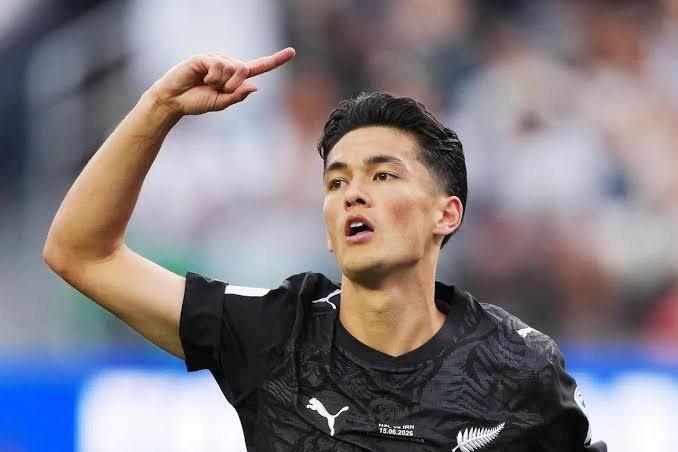
In the opening match against Iran, he scored twice — becoming the first New Zealand player in history to score two goals in a single World Cup match. His first came from a flicked-up volley in the sixth minute, set up by Wood, and it was sharp enough that FIFA later shortlisted it for goal of the tournament, putting Just’s name alongside Mbappé, Erling Haaland, and Messi. He added a third goal later in the tournament with a strike against Belgium in Vancouver, which made him New Zealand’s all-time leading World Cup scorer outright.
Key Facts and Career Highlights
- Breakout club season: In 2025–26, his first full season at Motherwell, Just scored seven goals and set up around seven or eight more in the Scottish Premiership, earning a nomination for the PFA Scotland Player of the Year and a place in the league’s Team of the Year.
- World Cup history-maker: First New Zealander to score twice in one World Cup match, and the first New Zealand player to feature on FIFA’s goal-of-the-tournament shortlist.
- All-time leading scorer: His tournament tally made him New Zealand’s top scorer in World Cup history, a record he took in just his first appearance at the tournament.
- Career move: Following the World Cup, Just completed a big-money transfer to Championship club Swansea City, reportedly a record fee for a New Zealand international.
- Playing style: Comfortable cutting in from the right onto his stronger left foot, but capable of finishing cleanly with either foot, as his opening goal against Iran showed.
What Made the Difference
There isn’t one single reason Just went from a fringe pro to a World Cup name overnight, but a few things lined up together.
He found the right club at the right time. Motherwell isn’t a glamorous club, but it gave him regular first-team football and a settled role on the right wing. Players from smaller nations often need that kind of stability more than a big move to a bigger league where they might sit on the bench.
His combination with Chris Wood clicked. Both of his standout World Cup goals came from link-up play with Wood, New Zealand’s captain and most experienced attacker. Having an established target man to combine with gave Just’s movement and finishing a clear outlet.
He was underestimated for years. Multiple people around New Zealand football have described Just as being written off early on for being small and slight. That’s a common pattern in football: technically gifted players who don’t fit a certain physical mould get overlooked, sometimes for years, until results force people to reconsider.
Common Misconceptions

“He came out of nowhere.” Not quite. Just had already built a strong reputation in Scotland before the World Cup — his Motherwell form was drawing transfer interest from Celtic and Rangers before the tournament even started. The World Cup made him globally known, but Scottish football fans already rated him.
“He’s just a super-sub.” His breakthrough international goal, against New Caledonia in World Cup qualifying, did come off the bench. But by the World Cup itself, he was a first-choice starter and New Zealand’s most dangerous attacking outlet.
“New Zealand got lucky.” A draw against a stronger, higher-ranked Iran side wasn’t luck. New Zealand were the lowest-ranked team in the tournament and still walked away with a point, largely because one player took his chances when they came.
Lessons for Football Fans and Analysts
If you’re trying to understand what Just’s rise says about scouting and player development more broadly, a few points stand out.
Physical stereotypes still cost clubs good players. elijah just A winger under 1.75 metres tall gets passed over more often than his output justifies, and Just’s case is a reminder that end product should carry more weight than size in early scouting decisions.
Smaller footballing nations can still produce standout elijah just individual talent, even without deep academy systems. What often separates a player like Just from someone who never breaks through is simply getting consistent minutes somewhere that trusts them.
Form at a smaller club can translate to the biggest stage, elijah just provided the player already has good decision-making and finishing habits. Just didn’t reinvent his game for the World Cup. He did what he’d been doing at Motherwell, just under brighter lights.
Frequently Asked Questions
Is Elijah Just related to the biblical prophet Elijah? No. “Elijah” is simply his first name, a common Hebrew-origin name meaning “My God is Yahweh.” “Just” is his surname. There’s no connection to the prophet beyond sharing the name.
What position does Elijah Just play? He’s a right winger, usually deployed wide on the right side of attack. He’s left-footed, which lets him cut inside onto his stronger foot when he receives the ball on that flank.
How many goals has Elijah Just scored for New Zealand? By the middle of 2026, he’d scored 11 or more goals in around 45 elijah just senior caps for New Zealand, including three at the 2026 World Cup, making him the country’s all-time leading scorer at the tournament.
Why was Elijah Just nominated for World Cup goal of the tournament? FIFA shortlisted his sixth-minute volley against Iran, a flicked-up strike set up by Chris Wood, as one of twelve goals in contention alongside elijah just efforts from Mbappé, Haaland, and Messi.
Which club does Elijah Just play for now? After a standout World Cup, Just moved from Motherwell to elijah just Championship club Swansea City in a transfer reported to be a record fee for a New Zealand international.
Did Elijah Just always play for big clubs? No. His path ran through smaller clubs in New Zealand, Denmark, and Austria before he settled at Motherwell in Scotland, where his best form finally came together.
Final Thoughts
Elijah Just’s rise isn’t a fairy tale built on one lucky night. It’s the result of several ordinary things stacking up: a stable role at a club that believed in him, a strong partnership with a more experienced teammate, and a player who kept improving even while being overlooked. The World Cup didn’t create his talent. It just gave the rest of the world a chance to see it.
For New Zealand football, his story might matter even more than the goals themselves. It shows a pathway other players from smaller nations can point to — get consistent football somewhere, keep your end product sharp, and the big stage will eventually find you.
